A common misconception in DeFi is that a wallet can tell you whether a transaction is “safe” simply by showing its gas fee and destination address. That view treats a blockchain transaction like a package: inspect the label, then approve delivery. In reality, a transaction is closer to a set of instructions executed against changing financial state. It may transfer tokens, grant permissions, interact with several contracts, or cause a protocol to calculate a price at the moment of execution.
Transaction simulation exists to make those instructions more legible before a user signs. It asks a practical question: if this transaction were executed under an assumed set of current conditions, what would the wallet and relevant contracts report afterward? For DeFi users in the US, where a rushed signature can turn a routine swap into an expensive mistake, that preview can be one of the most useful security signals available. It is also easy to misunderstand.
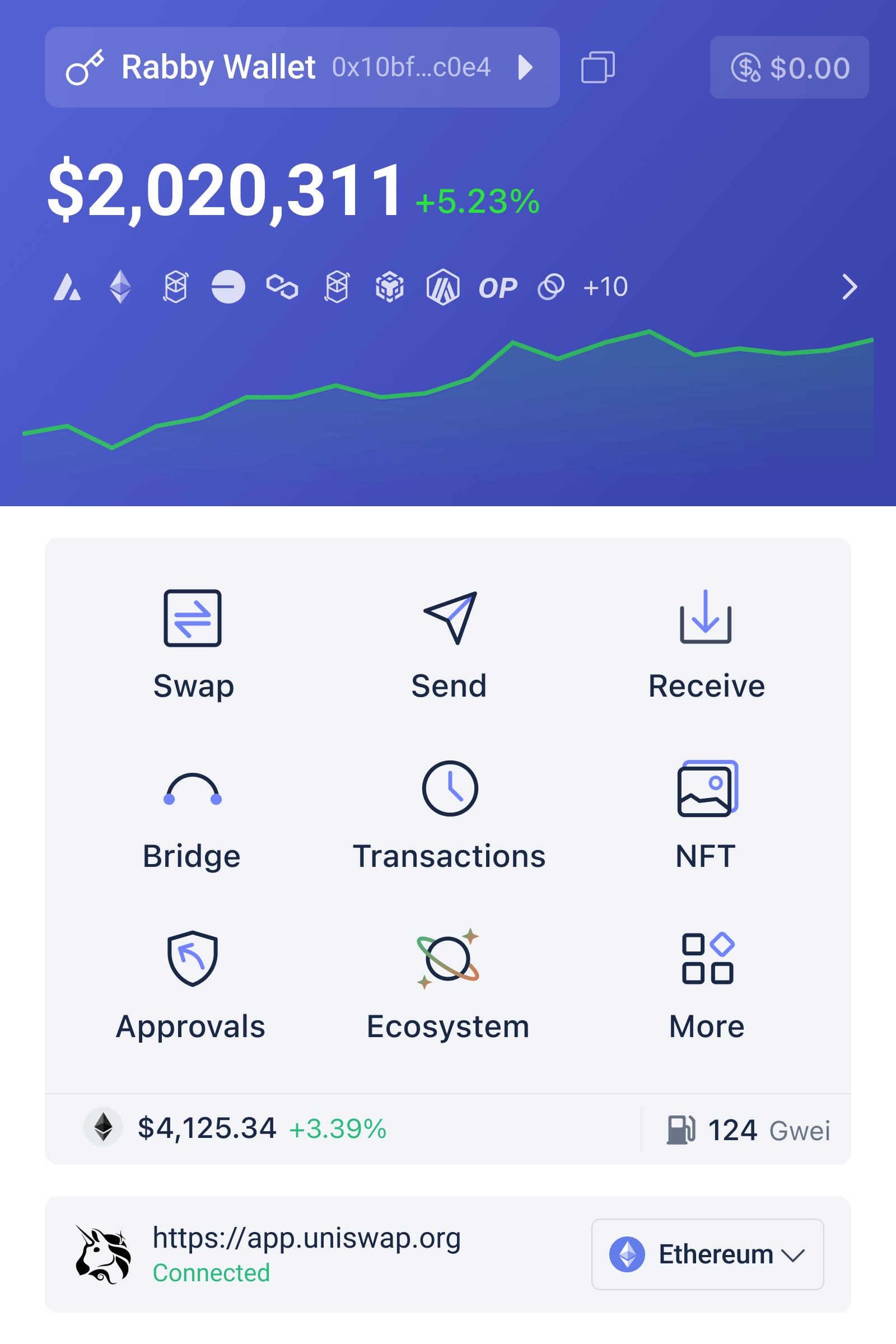
How transaction simulation changed the wallet experience
Early cryptocurrency wallets largely emphasized key custody and transaction broadcasting. They showed an address, an amount, and often a fee estimate. That model made sense when users mostly sent a native asset from one account to another. DeFi changed the problem. A single click in a web application may create a transaction containing contract calls whose consequences are not obvious from the interface.
Smart contracts are programs deployed on a blockchain. When a user signs a contract transaction, the wallet is authorizing those instructions to run with the user’s account as the caller. A token swap may call a router, invoke one or more token contracts, move assets through a liquidity pool, and return a different token. A lending action may alter collateral, debt, and liquidation conditions. An approval may not move funds immediately, but it can give a spender authority to move them later.
Simulation adds an interpretive step between the decentralized application and the signature request. The wallet or an associated service attempts to execute the proposed call in a controlled environment, often using a recent representation of the chain’s state. It can then compare the account’s apparent balances and permissions before and after the call. The resulting message might indicate that a user will receive a token, lose a token, set an allowance, or encounter a likely revert.
That is a major improvement over reading raw calldata, the encoded instructions sent to a contract. Most users should not be expected to decode hexadecimal data manually. Yet simulation is not magic translation. It is an estimate of a program’s outcome under particular state assumptions, not an independent guarantee that the application, contract, or economic decision is trustworthy.
The sharper mental model: simulation checks execution, not intent
The most useful distinction is between what a transaction will do technically and whether you should want that result. Simulation is often strongest at the first question. It may reveal that a supposed claim transaction sends a valuable token to another address, or that a “mint” request actually creates a broad token approval. It can also identify a transaction that appears likely to fail, saving the user from paying for an unsuccessful attempt.
The second question requires judgment. Suppose a simulation shows that a swap sends 1 ETH and returns a stablecoin. That does not establish that the exchange rate is fair, that the token is genuine, that the liquidity can be withdrawn later, or that the contract will remain benign. The result may be mechanically accurate while the economic choice is poor. In other words, simulation is closer to a pre-flight inspection than to an investment adviser.
This distinction corrects another frequent misconception: a clean preview does not mean the website that requested the transaction is legitimate. A malicious application can construct a transaction whose effects are plainly visible but still harmful. If the preview says “approve a large amount of a valuable token to an unfamiliar spender,” the simulation has done its job by making the risk visible. It has not automatically blocked the user from accepting it.
For that reason, a wallet security routine should read the preview as a set of questions:
- Which assets leave the wallet, and which assets arrive?
- Is the recipient or spender the party the user expected?
- Is this an approval, and if so, how much authority does it create?
- Does the action involve a contract the user recognizes?
- Does the result make economic sense given the intended action?
The last question is particularly important. A user who intends to swap one asset for another should be suspicious if the preview shows only an outgoing transfer, an unexpected NFT, or a new allowance without a corresponding exchange. Security is often less about spotting one dramatic warning than noticing a mismatch between intention and effect.
Where simulation helps most in DeFi security
Simulation is valuable because DeFi transactions are composable. Composability means one contract can call another, allowing protocols to combine swaps, lending, staking, bridging, and vault operations. It also means the visible button in a web application may conceal a chain of effects. A simulation can make that chain more understandable by presenting net balance changes and permission changes rather than forcing the user to reason from the interface alone.
Approvals deserve special attention. In many token systems, an allowance permits a designated spender to transfer tokens from the user’s account up to a specified limit. The approval itself may not transfer anything, which makes it easy to dismiss. But its security significance is persistent: if the spender is compromised, malicious, or simply not what the user thought, the allowance can become a route to later losses. A preview that distinguishes “approve” from “send” helps users see that authorization is an asset-security decision even when the immediate balance does not change.
Simulation can also help with failed transactions. A contract may reject a call because a deadline has passed, a minimum output is too high, a pool lacks sufficient liquidity, or a protocol condition is not satisfied. Detecting a likely revert before broadcasting may protect the user from wasting network fees. Still, a predicted success is not identical to guaranteed success. Blockchain state can change between the simulation and the mined transaction, especially in active markets. Another participant may trade against the same pool, a price may move, or a protocol’s relevant condition may change.
That timing issue reveals a subtle limit: simulation has a state horizon. It observes a snapshot or approximation, while the actual transaction executes later, possibly in a different block. The shorter the delay and the more stable the relevant state, the more informative the preview may be. The more market-sensitive or adversarial the transaction, the larger the gap can become. This is why slippage limits, deadlines, and careful review still matter for swaps even when a simulation looks normal.
What simulation cannot reliably tell you
A simulation generally does not prove that a smart contract is free of vulnerabilities. It exercises the proposed path, not every possible path. A contract can behave normally during a preview while containing a flaw that appears only under a different caller, block condition, price, or sequence of interactions. Formal auditing, code review, and protocol history address different questions; none should be confused with a wallet-level transaction preview.
Nor does simulation eliminate wallet-draining risks outside the transaction itself. A user may reveal a recovery phrase, sign a malicious message, install a fake browser extension, or approve a transaction on the wrong network. Some off-chain signatures do not look like ordinary token transfers, even though they can authorize later actions in systems designed to support them. The broader lesson is that wallet security has several layers: protecting the private key, verifying the application and domain, understanding the signature, and inspecting the resulting on-chain authority.
There is also a question of trust in the simulation pipeline. If a wallet depends on an external service to calculate or interpret the result, that service may be unavailable, incomplete, or working from imperfect data. A failed simulation might mean the transaction is dangerous, but it might also reflect an unsupported contract or temporary infrastructure problem. Conversely, a successful simulation may be based on assumptions that do not capture every relevant condition. Users should treat warnings as information requiring investigation, not as a simple traffic-light system.
These limitations do not make simulation unhelpful. They define its proper role. It is a risk-reduction tool that improves visibility at the moment of signing. It is not a substitute for verifying the application, limiting approvals, using separate wallets for different purposes, or keeping recovery credentials offline and private.
A practical signing framework for US DeFi users
Before installing any browser wallet extension, verify that the source is authentic and that the extension is the expected product. A legitimate-looking search result or advertisement is not enough. Users evaluating the rabby extension download should independently check the destination and review the permissions requested by the browser. The installation step is part of the security model, not a trivial prelude to it.
Once a wallet is installed, a useful habit is to separate four kinds of review. First, inspect the identity: which account, network, contract, spender, or recipient is involved? Second, inspect the movement: what assets leave and enter the wallet? Third, inspect the authority: does the transaction create or expand an allowance or another permission? Fourth, inspect the assumptions: could price, liquidity, block timing, or protocol state change before execution?
This framework is more reliable than focusing only on the dollar value shown by an application. A transaction involving no immediate transfer can still create dangerous authority. A low-value transaction can be a test of a malicious approval. A high-value transaction can be legitimate but still poorly timed. The relevant question is not simply “How much am I sending?” It is “What capability am I granting, and what state change am I accepting?”
Users should pause when a preview conflicts with the action they intended. If a claim appears to require an unlimited approval, if a swap produces an unexpected asset, or if the recipient is unfamiliar, stopping is rational even when the website urges urgency. When the simulation is unavailable, the safest response is not to guess. It is to reduce exposure, investigate the contract and application through independent channels, or postpone the transaction until the warning is understood.
What to watch next
The likely direction of wallet security is not merely more warnings, but better translation between contract behavior and human intent. A useful future preview would explain not only that an allowance is changing, but why the application needs it, how long it may remain active, and what could use it later. It could also distinguish a routine balance change from a durable permission change, since those carry different kinds of risk.
That progress will depend on difficult conditions. DeFi contracts are diverse, transactions are increasingly composable, and attackers can adapt to whatever users learn to ignore. More detailed alerts may also create warning fatigue if every complex transaction appears alarming. The strongest tools will therefore need to improve precision as well as coverage: highlighting meaningful mismatches without pretending that all risk can be reduced to a single score.
For now, the practical implication is clear. Transaction simulation makes signing more informed by showing a plausible execution result, but the user remains responsible for connecting that result to intent, trust, and changing market conditions. The safest DeFi habit is not blind confidence in a preview. It is disciplined curiosity about what the preview means.
Frequently asked questions
Does transaction simulation guarantee that my DeFi transaction is safe?
No. It can expose likely balance changes, approvals, and failed execution, but it cannot prove that a contract is secure, that an application is authentic, or that the economic outcome is favorable. It should be combined with domain verification, permission review, and sensible limits on wallet exposure.
Why can a simulated transaction differ from the final result?
Simulation uses an assumed view of blockchain state. Between the preview and confirmation, prices, liquidity, balances, block conditions, or protocol state may change. Network delays and complex contract interactions can widen that gap, which is why slippage settings, deadlines, and a final review remain important.
Is an approval less risky because it does not immediately transfer tokens?
No. An approval can grant another address or contract permission to move tokens later, sometimes up to a large limit. The immediate balance may look unchanged while the wallet’s future exposure has increased. Treat approval requests as authority changes, not as harmless setup steps.